
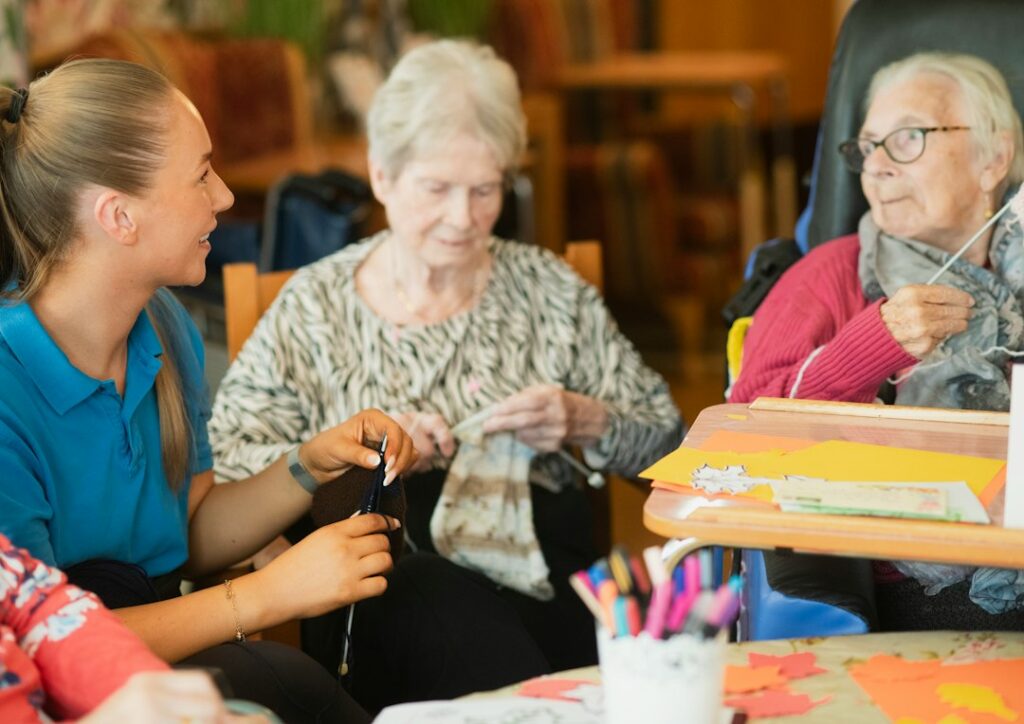
Why does creativity matter in assisted living?
Creative activities support emotional well-being, social connection, communication, and a sense of purpose. They are not limited to people who consider themselves artists. Drawing, music, storytelling, gardening, cooking, decorating, sewing, woodworking, photography, and simple problem-solving can all provide meaningful creative experiences.
For older adults, creativity can also preserve identity. A resident may have spent years baking for family gatherings, repairing household items, singing in a choir, arranging flowers, keeping a journal, or making handmade gifts. Assisted living activities are most useful when they connect with those familiar interests rather than treating every resident as a beginner.
Creative time can offer several practical benefits:
- A reason to begin the day or look forward to a group activity
- Opportunities for conversation and friendship
- Gentle hand movement and coordination practice
- A way to express feelings that may be difficult to explain
- A chance to make choices and maintain independence
- An activity that can be adapted to changing vision, hearing, memory, or mobility
Creativity should not be viewed as a competition or a test of talent. The process matters more than the finished item.
What creative activities work well for older adults?
The most suitable activities are flexible, familiar, and easy to adjust. Residents should be able to participate sitting down, take breaks, and complete the activity at different levels of difficulty.
Common options include:
- Watercolor painting, colored pencils, large-print coloring, and collage
- Listening to familiar music, singing, rhythm activities, and simple instruments
- Writing life stories, recording memories, or creating family recipe cards
- Seasonal decorating using paper, fabric, leaves, pinecones, or other safe materials
- Container gardening, seed starting, arranging flowers, or caring for indoor plants
- Knitting, weaving, sewing, beadwork, or other adapted handcrafts
- Puzzles, model building, card games, and open-ended building activities
- Cooking demonstrations that focus on safe preparation, familiar aromas, and shared memories
- Photography, photo discussions, and creating memory books
- Poetry, reading aloud, dramatic storytelling, and reminiscence groups
Activities do not need to produce something decorative. Choosing music for a gathering, suggesting a theme for a bulletin board, telling a family story, or helping arrange a table can also be creative participation.
How can activities be adapted for different abilities?
A creative program should offer more than one way to take part. A resident with arthritis may enjoy selecting colors or directing another person rather than handling small tools. Someone with limited vision may prefer textured materials, music, movement, or storytelling. A person living with memory loss may respond well to familiar songs, photographs, repeated routines, and sensory activities.
Helpful adaptations include:
- Using large-handled brushes, easy-grip scissors, and lightweight materials
- Providing high-contrast paper and bold markers for residents with low vision
- Offering seated options and stable work surfaces
- Breaking projects into short, clearly explained steps
- Showing a completed example without requiring residents to copy it
- Allowing residents to observe, assist, or participate for only part of an activity
- Reducing background noise for people who have trouble concentrating
- Providing verbal descriptions of colors, shapes, objects, and demonstrations
- Avoiding correction when a resident’s work looks different from the intended example
A resident does not need to finish a project to benefit from it. Participation may mean holding a brush, choosing between two materials, humming along with a song, or sharing an opinion.
How can family members support senior creativity?
Family members can help by learning what the older adult enjoyed before moving into assisted living. Specific questions often work better than asking, “What hobbies do you have?” Consider asking about favorite songs, holiday traditions, work-related skills, household projects, recipes, collections, or activities enjoyed with children.
Useful family contributions may include:
- Bringing copies of family photographs for a memory project
- Sharing a favorite recipe or story connected to a tradition
- Providing safe, familiar craft materials when permitted
- Listening to a resident explain a finished project
- Displaying handmade work in a respectful way
- Joining a creative activity without taking control of it
- Recording stories, songs, or spoken memories with the resident’s permission

The goal is not to add pressure or create a performance expectation. Praise should focus on effort, personal meaning, and enjoyment rather than appearance.
What should assisted living staff consider before planning creative programs?
Good planning begins with resident preferences and safety. An activity may appear simple but still require attention to allergies, swallowing risks, fall hazards, sharp tools, heat, fumes, infection control, and supervision needs.
Staff should consider:
- Whether materials are non-toxic, washable, and easy to handle
- Whether tables, chairs, and walkways allow safe movement
- Whether residents can hear instructions and see demonstrations
- Whether the activity can be paused without causing frustration
- Whether food-related programs account for dietary restrictions
- Whether plants, scents, or natural materials could trigger allergies
- Whether residents with cognitive changes may need individual guidance
- Whether projects can be completed in a single session or stored safely
Seasonal conditions also matter in Berwick. Winter weather can limit outdoor access, so indoor gardening, music, storytelling, and window-based nature observation may be useful during colder months. In warmer seasons, shaded outdoor activities can provide fresh air while avoiding excessive heat, glare, and uneven walking surfaces.
Does creativity help residents with dementia?
Creative activities may support communication, comfort, attention, and social engagement for people living with dementia. Familiar music, rhythm, sensory materials, and remembered routines can remain accessible even when other abilities change.
Activities should be brief, predictable, and free of unnecessary choices. Instead of presenting many supplies, offer two or three options. Instead of asking a resident to remember instructions, demonstrate one step at a time. Avoid correcting artwork, lyrics, stories, or personal interpretations unless safety is involved.
Reminiscence can be especially valuable. A resident may respond to photographs, fabric, household objects, holiday music, or the smell of a familiar recipe. The purpose is not to test memory. It is to invite connection in the present.
How can creativity be included in everyday routines?
Creative expression does not need to appear only on a scheduled activity calendar. Everyday choices can make assisted living feel more personal and engaging.
Residents might choose table decorations, select music during a gathering, arrange personal items, help name a group project, or contribute ideas for seasonal displays. A short conversation about a favorite color, song, meal, or family tradition can also support self-expression.
Small opportunities for choice are particularly valuable for residents who have lost control over many parts of daily life. Offering two meaningful options—such as painting or music, indoor plants or storytelling—can support independence without creating an overwhelming decision.
What misconceptions should families avoid?
A common misconception is that creativity requires artistic skill. In reality, many residents benefit from familiar, sensory, social, or practical activities that do not resemble formal art classes.
Another misconception is that a person who cannot complete a project is not benefiting. Listening, choosing, observing, remembering, and encouraging others are all legitimate forms of participation.
Finally, creative activities should not be treated as a way to keep residents busy. The strongest programs respect personal history, allow genuine choice, and make room for conversation, humor, emotion, and individual pace. In assisted living, creativity is part of meaningful daily life—not merely an item to check off a schedule.
